Low-Code, BPM, Workflow Automation: Differences, Roles, and Seamless Collaboration
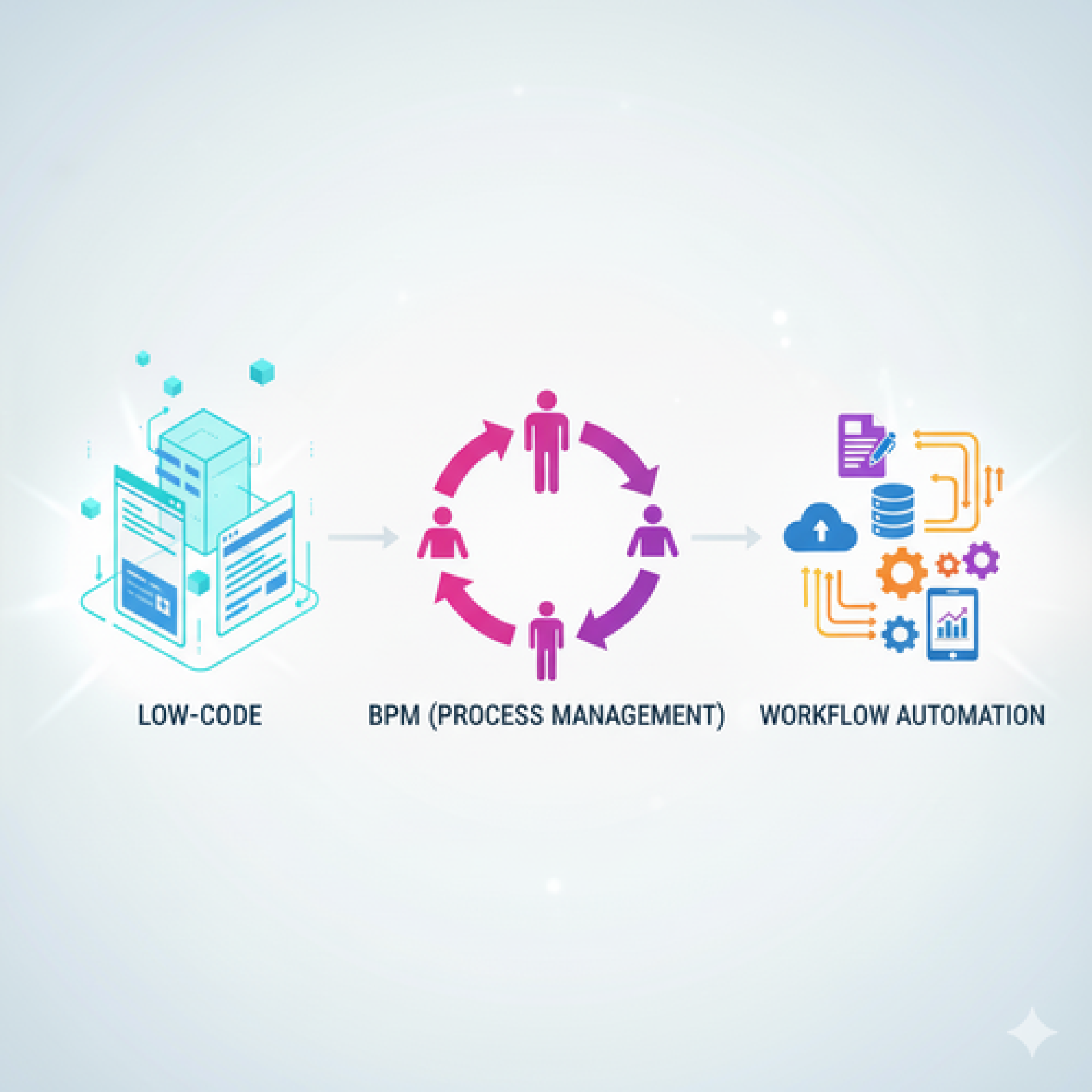
Low-Code, BPM, Workflow Automation: Steps Towards a Complete Workflow
In the modern business world, several terms are frequently discussed, such as Low-Code, Workflow Automation, and BPM (Business Process Management). Many people often mistakenly believe that these terms have the same meaning or are entirely interchangeable. However, in reality, all three play distinctly different roles. Understanding these differences is crucial to help you select the right tools and correctly plan your business strategy.
This article will clarify what each term is and how these three components can work together to create the most comprehensive and effective automation system.
What is Low-Code?
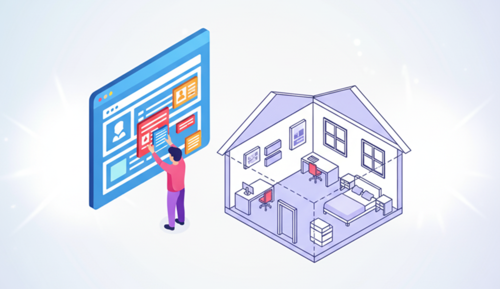
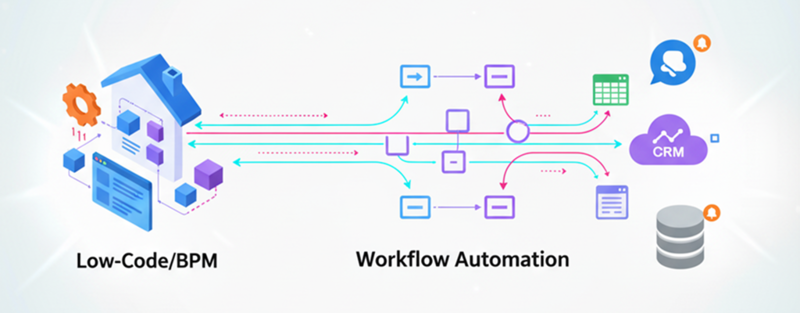
If we were to make a comparison, Low-Code is like building "an entire house" that has a strong structure, various rooms, doors and windows, and a fully functional internal system. This type of platform allows us to quickly create Applications without needing to write complex code. For example, Joget, a popular Low-Code platform, helps us to build:
-
User Interface (UI):
The look and feel of the system that users will access and interact with.
-
Business Logic:
The rules and internal operational steps of the system, such as what the system does next when data is entered into a form.
-
Database:
The part used for storing all of the application's data.
Advantages of Low-Code:
-
Rapid Development of Complete Systems:
It's ideal for building new, specialized applications, such as a document management system, an internal approval system, or a customer portal.
-
High Flexibility:
The appearance (UI) and functions can be customized according to specific business needs.
-
Strong Core:
The application and its database work together efficiently.
Limitations: Generally, Low-Code tools excel at managing internal systems, but connecting or transferring data to complex external applications may not be as straightforward or convenient.
How is BPM (Business Process Management) Involved?
BPM is a Methodology or management concept that helps an organization continuously analyze, design, and improve various business processes. However, from an execution standpoint, a BPM tool or system acts as a "Data Transportation System Between People." Simply put, BPM's role is to plan and manage who needs to approve the data once it's entered, who needs to be notified, and how the data should be forwarded to the next person in the process.
BPM is the "Blueprint" for Human Collaboration: BPM helps you answer these questions:
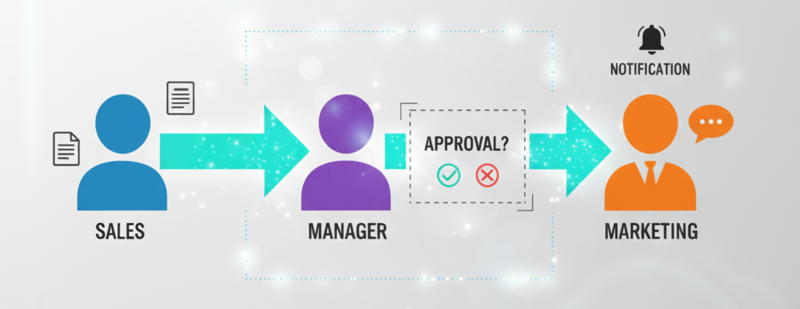
- Who must the document approval process go through?
- Once Employee A fills out a form, does the data need to be sent to Manager B for review?
- How can data be automatically transferred from the Sales department to the Marketing department?
Once we have planned using the BPM methodology, we then utilize tools to bring that plan to life.
What is Workflow Automation?
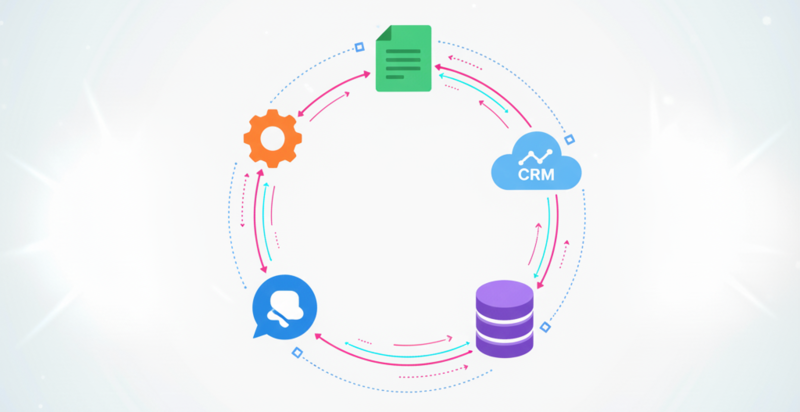
If Low-Code is about building an entire house, then Workflow Automation is about creating a "Data Transportation System Between Applications" that connects and moves data between several houses. This type of tool focuses on Integration and Automating workflows.
Workflow Automation platforms do not create new applications or User Interfaces; instead, they serve as the intermediary for connecting the applications you are already using. Imagine you have sales data in Google Sheets, communication channels in Slack, and a customer management system in Salesforce.
A Workflow Automation tool acts like a conveyor belt, automatically moving data from Google Sheets to Salesforce and sending notifications to Slack when specified conditions are met.
Advantages of Workflow Automation:
-
Diverse Connectivity:
Offers a wide variety of Connectors, allowing for seemingly limitless connections between various systems.
-
Rapid Setup:
Ideal for automating specific, focused tasks that require quick implementation.
-
Data Flow Focus:
Highly capable of managing data that needs to travel from one location to another.
Limitations: These tools do not create the system themselves and do not have a database to store all the information. If there are no main applications working in tandem, the Workflow Automation tool can only act as a data forwarder.
Low-Code vs BPM vs Workflow Automation: Which is Suitable for Which Task?
| Issue | Low-Code Platform (e.g., Joget) | BPM Concept (Business Process Management) | Workflow Automation Tool (e.g., n8n) |
| Primary Role | Building applications or core systems | Managing the flow of data between people | Managing the flow of data between applications |
| Example Use Case | Building a document management system, or an HR management system | Defining the document approval process: who must approve before data is forwarded | Notifying Slack when new data appears in a system |
| Concept | Building a complete "House" | Building a "Blueprint" and managing "human workflow" | Building a "Road" that connects various apps |
| Suitable For | Creating new, custom systems or systems with complex internal processes | Analyzing and improving workflows that involve people | Automating processes between different applications Export to Sheets |
When Low-Code, BPM, and Workflow Automation Work Together
This is the core of the most powerful solutions in the digital age. Instead of choosing just one, we can bring all three to work together perfectly.
Application
Imagine you need a document management system with complex approval steps. You can use the BPM concept to analyze and design the correct and appropriate approval process for people in the organization. Then, use the Low-Code platform to build the core system for approval, and use the Workflow Automation tool to connect the system to Slack to notify executives.
Subsequently, when a document is uploaded into that system, the system will automatically send the data to the Workflow Automation tool. The tool will then:
- Send a notification to the relevant person's Slack to inform them that a new document has arrived.
- Send a copy of the document to Google Drive for storage in the correct folder.
- Send important document data to be recorded in Google Sheets for reporting purposes.
This collaboration ensures that your Workflow not only has a strong core system (from Low-Code) but also has the unlimited capability to connect and work with other applications (from Workflow Automation), all under excellent planning (from BPM).
Summary
Low-Code, BPM, and Workflow Automation are not the same thing, but rather crucial pieces of a perfectly assembled jigsaw puzzle. BPM is the Communicator Manager between people, Low-Code is the Creator that builds the applications, and Workflow Automation is the Integrator that allows various systems to communicate with one another.
Understanding the true role of each component will enable you to effectively and efficiently leverage these tools to drive your business into the digital world with the best value.
Looking to transition into digital with a trusted Low-Code and Workflow Automation solution?
Authorwise Co., Ltd. is the Low-Code expert officially certified by Joget as an Accredited Partner. We are ready to provide consultation and develop solutions that perfectly meet your business needs with the highest efficiency.